








How to Choose a Polarizer for Smartphones: Cutting Glare on Water, Glass & Cars
Why does bright sunlight make it harder for your smartphone to capture balanced images? When you’re outdoors, sunglasses help reduce brightness so you can see more clearly. A polarizer filter does the same thing for your mobile lens—acting like sunglasses for your camera. Since lighting on smartphones can be tricky, using a polarizer can enhance your shots and help you capture cleaner, more balanced images. In this blog, we’ll go over how to make the most of a polarizer filter for your smartphone photography.
What a Smartphone Polarizer Can Improve
1. Water Surfaces/Lakes, Beaches, Pools: Water surfaces tend to have very strong glares, so adding a polarizer will allow the natural colors of the water to stand out. Depending on how clear the water is, it can also help you capture underwater details like rocks or sand, and maybe even some fish.
2. Glass/Windows, Storefronts, Car Interiors: Reflections from windows can be distracting in photos, especially if you need to stand in front of a window to capture a shot. A polarizer will allow you to cut reflections and enhance clarity in the glass.
2. Glass/Windows, Storefronts, Car Interiors: Reflections from windows can be distracting in photos, especially if you need to stand in front of a window to capture a shot. A polarizer will allow you to cut reflections and enhance clarity in the glass.
3. Cars/Paint, Windshields, Metallic Surfaces: When photographing cars, they can have bad glares on the windows and surfaces, so a polarizer will help eliminate harsh lighting while enhancing the colors on the car.
The image below shows a car photographed using SANDMARC’s polarizer, the Drama Filter. In the ‘After’ example, you can see how the white reflections are noticeably reduced, especially on the area to the left of the headlight.
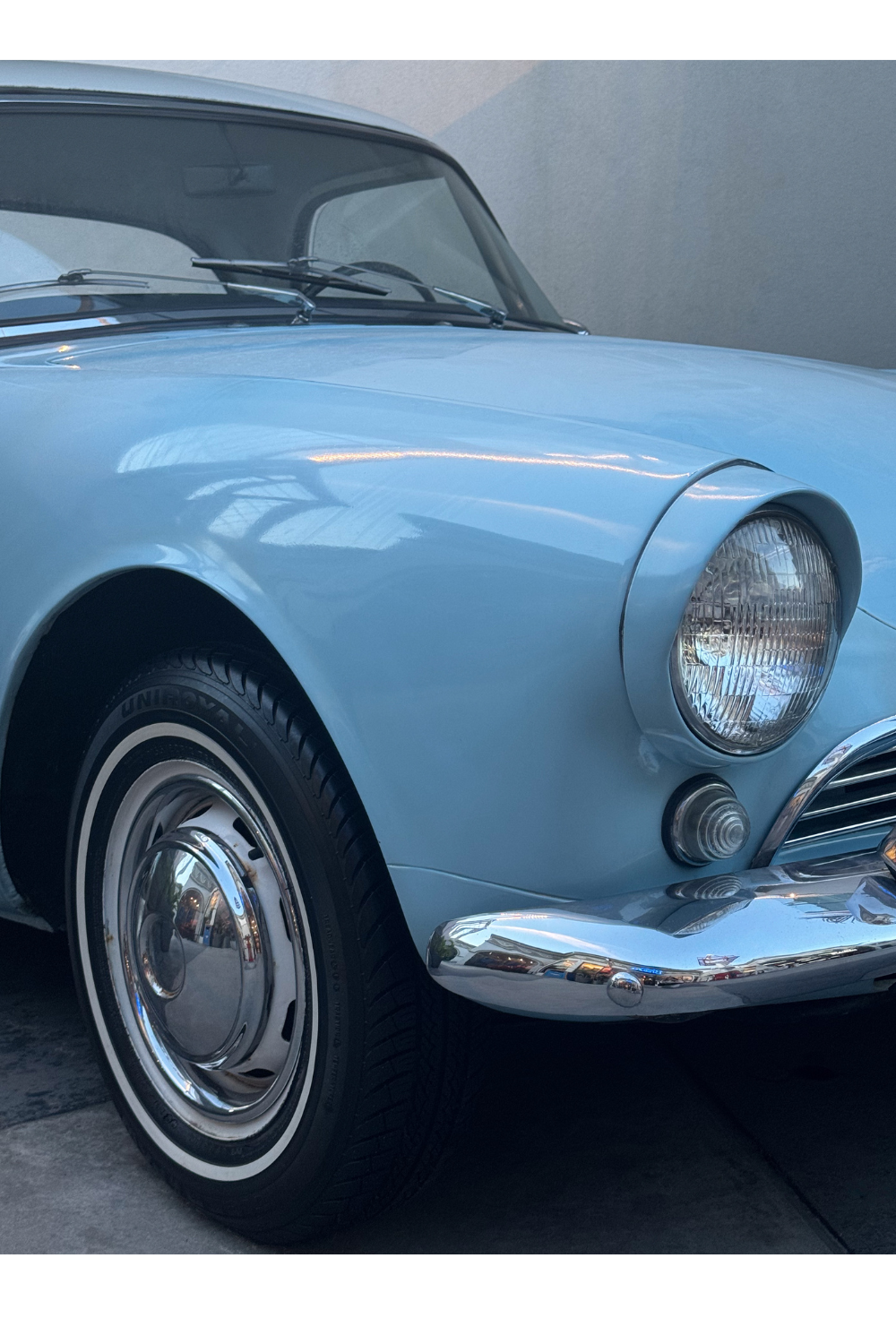
Before
Shot on iPhone
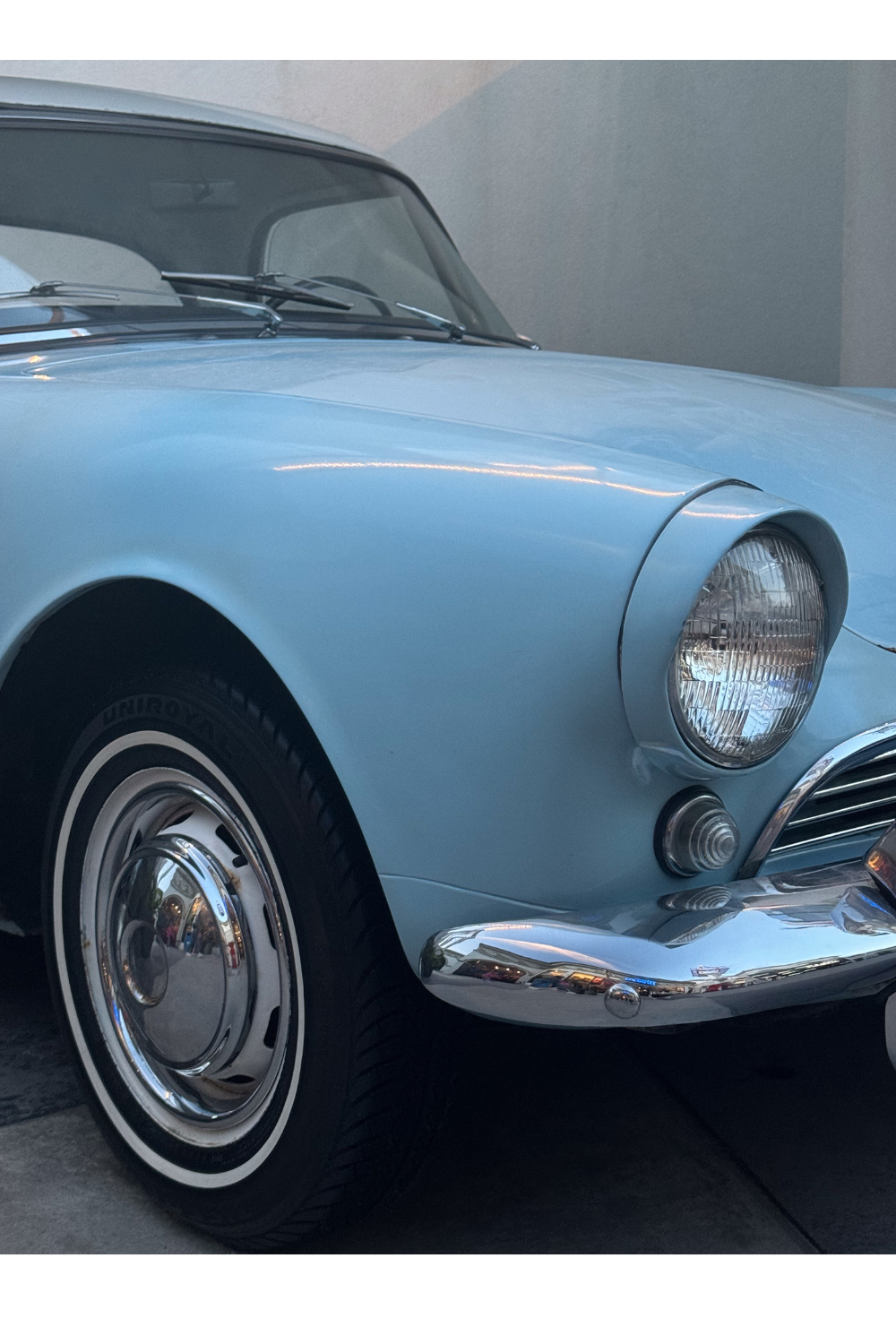
After
Shot on iPhone + Drama Filter
6 Key Features to Look For in a Smartphone Polarizer
1. Circular Polarizer (CPL) vs. Linear Polarizer: A linear polarizer blocks light in only one direction, which can confuse a smartphone’s autofocus and exposure systems. A circular polarizer uses a linear layer plus an extra quarter-wave plate to re-randomize the light, giving you the same glare-cutting benefits while staying fully compatible with smartphone cameras.
2. Multi-Coated Optical Glass: Multi-coated optical glass matters because even a camera lens can catch glares from various external light sources. This coating reduces reflections, allowing more light in for better contrast. The coloring will be more accurate, and the images will be sharper as well. On top of the visual enhancements, it also provides scratch resistance and allows for easier cleaning.
3. Rotating Adjustment Ring: When you're capturing photography, the lighting can quickly change, which is why it’s important to have a filter that allows you to adjust it. Rotating a CPL will change the effect on glare and saturation while you’re on the go.
4. Mounting Style: Clip-On vs. Case Mount vs. Magnetic: Ensuring that the filter has an optimal mounting system is important for ease of use and stability. A case-mount system is generally more secure since it can twist and tighten into place, while a clip-on and magnetic mount may be a bit more wobbly and less stable in certain situations.
5. Compatibility With Smartphone Lenses: To truly elevate your shots, it’s important to ensure that the filter is compatible with lenses like a wide or telephoto lens.
5. Compatibility With Smartphone Lenses: To truly elevate your shots, it’s important to ensure that the filter is compatible with lenses like a wide or telephoto lens.
6. Build Quality & Travel Durability: Photography is a travel-heavy activity, and having gear that can hold up while you’re on the go and withstand accidental drops is important. Metal can often provide more durability compared to plastic framing, so leaning toward metal is usually best.
How to Use a Polarizer on a Smartphone for the Best Results
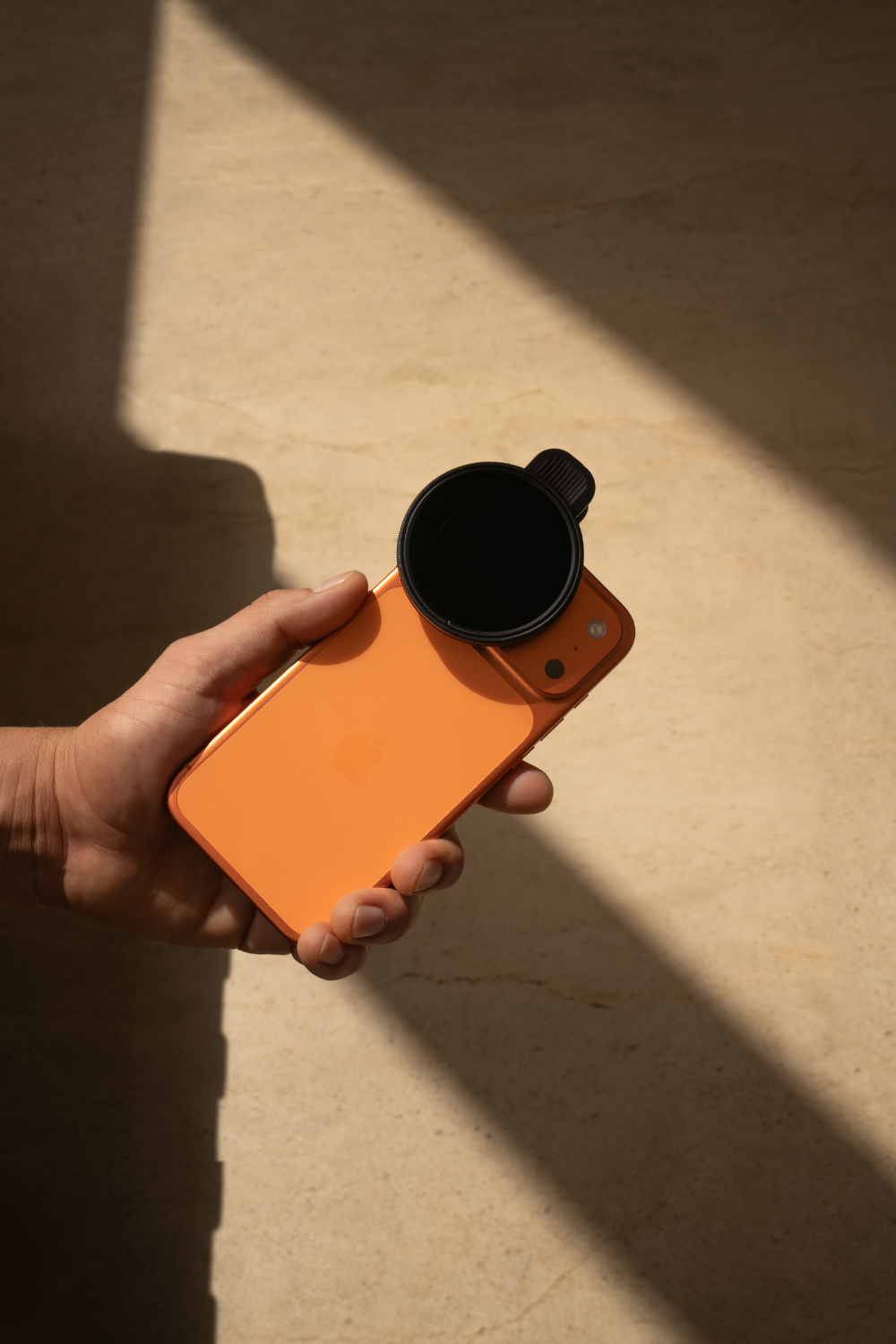
When using a polarizer, remember that rotating the filter is what controls the strength of the effect, so take a moment to adjust it until reflections and colors look right. For best results, avoid shooting directly into the sun and instead position yourself at a 30–45° angle to reflective surfaces like water, glass, or metal. You’ll get richer color tones if you shoot before midday, when the sun is lower and the light is softer. As you adjust the filter, keep an eye on your exposure, even small rotations can subtly change the brightness of your image.
Polarizer FAQs for Smartphone Shooters
Do polarizers work on all iPhones and Samsung phones?
Yes. Polarizers are compatible with iPhones and Samsung phones. SANDMARC filters work with all iPhone models and are currently available for the Samsung S25 Ultra series.
Will a CPL affect exposure or brightness?
Yes. A CPL affects both brightness and exposure. It reduces overall light entering the lens, so you may notice a drop in brightness and may need to adjust exposure manually or rely on your phone’s automatic adjustments.
Yes. Polarizers are compatible with iPhones and Samsung phones. SANDMARC filters work with all iPhone models and are currently available for the Samsung S25 Ultra series.
Will a CPL affect exposure or brightness?
Yes. A CPL affects both brightness and exposure. It reduces overall light entering the lens, so you may notice a drop in brightness and may need to adjust exposure manually or rely on your phone’s automatic adjustments.
How do you avoid vignetting on iPhone ultra-wide lenses?
Vignetting can happen when using filters on ultra-wide lenses due to the wider field of view. You can often minimize it by ensuring the filter is properly aligned and avoiding stacking accessories. If some vignetting remains, it’s easy to correct during editing.
Can you stack a polarizer with ND filters?
Yes. SANDMARC’s Hybrid Filter combines a polarizer and ND filter into one, allowing you to use both effects simultaneously without stacking separate filters.
Comparing the SANDMARC Drama Filter and Hybrid Filter
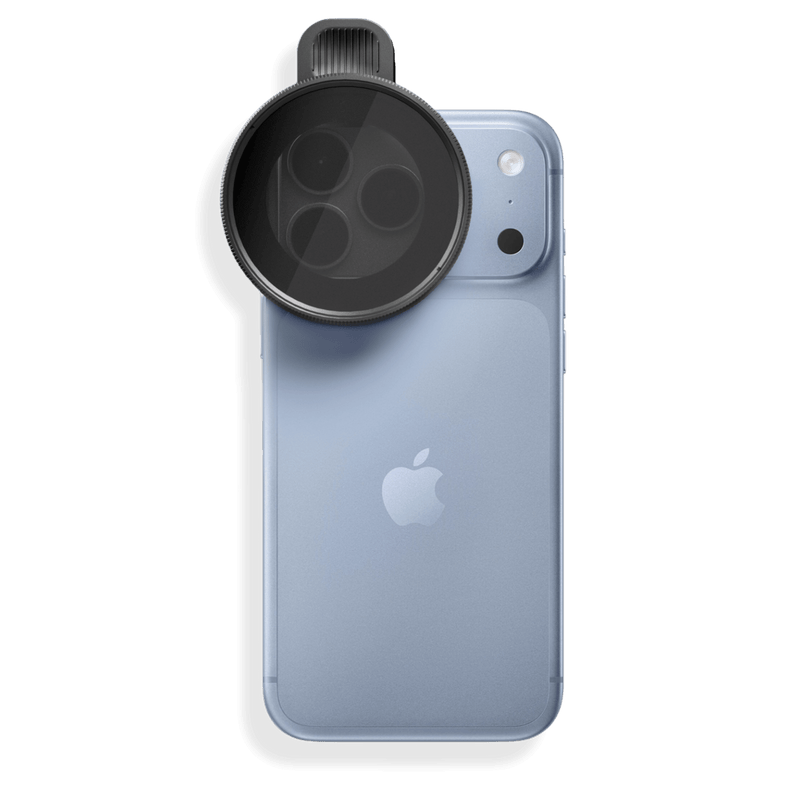
The Drama Filter is a polarizer that helps reduce glare, manage reflections, and add deeper contrast to skies. The Hybrid Filter includes all the benefits of the Drama Filter but also incorporates an ND element, allowing for more controlled shutter speeds and a cinematic motion blur. The Hybrid Filter is great for dynamic landscape shots or video work, while the Drama Filter is ideal for portraits and everyday photography. Both can be used interchangeably, but if you capture both photos and video, the Hybrid Filter offers the most versatility.
Final Recommendation: The Ideal Polarizer Setup for Mobile Creators
Choosing the right polarizer comes down to understanding your lighting conditions and selecting gear that enhances clarity, color, and control. With a high-quality CPL, you can dramatically reduce glare on water, glass, and reflective surfaces while improving overall contrast and detail.
For a reliable, travel-ready setup, SANDMARC’s Hybrid Filter delivers strong build quality and versatile performance. If you want a simpler option for portraits and everyday shots, the Drama Filter keeps reflections under control. Together, they make it easy to capture polished images in any environment.
For a reliable, travel-ready setup, SANDMARC’s Hybrid Filter delivers strong build quality and versatile performance. If you want a simpler option for portraits and everyday shots, the Drama Filter keeps reflections under control. Together, they make it easy to capture polished images in any environment.
Author's Bio
Born on the California coast, SANDMARC designs gear for those who live life in motion—travelers, photographers, and filmmakers. Every SANDMARC product is thoughtfully designed to elevate how you capture, carry, and experience the world. With a focus on quality and functionality, their blog offers tips, guides, and inspiration to enhance the creative journey.

